AI assistant for your clients: an agent with a remit, not a chat window
What makes it useful in a business that serves clients is not that it talks. It is what it is allowed to know, what it is allowed to do, and what it does when it should not answer.
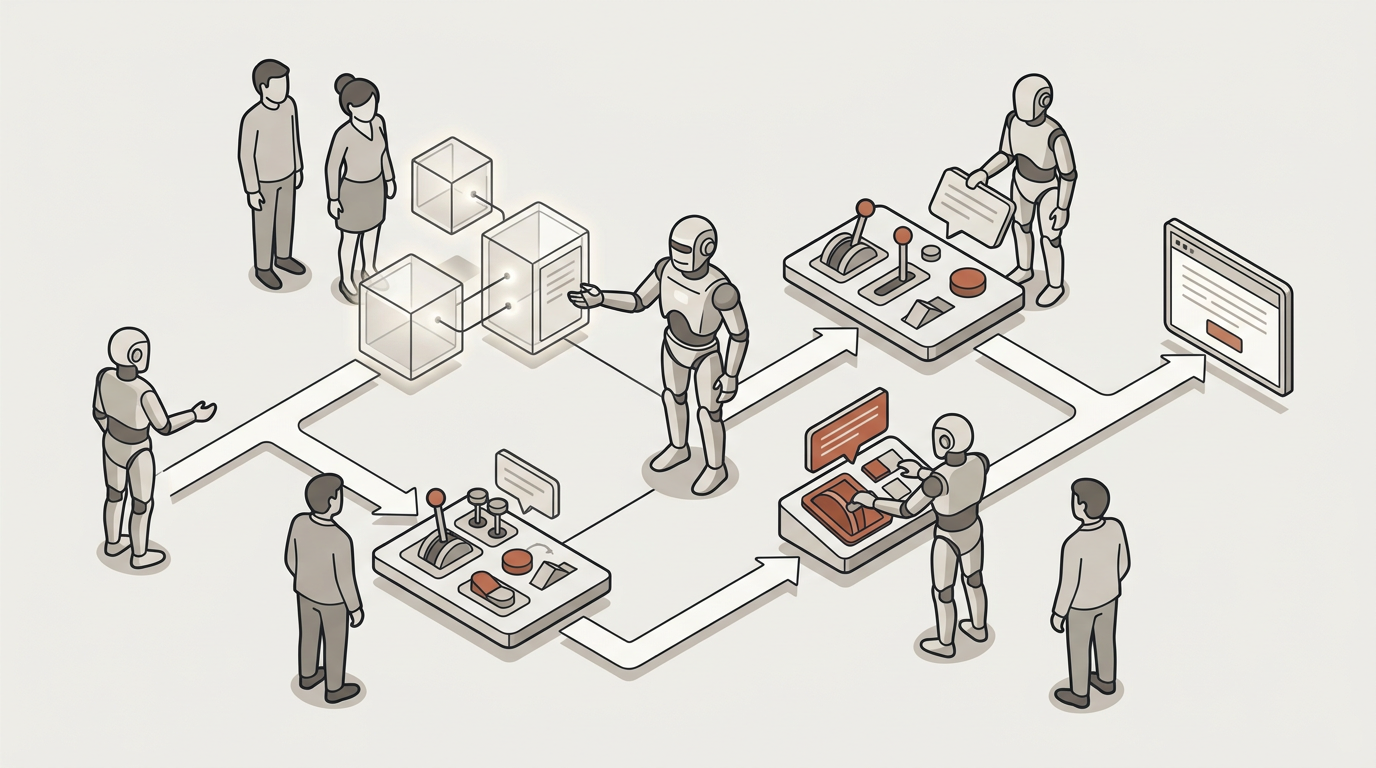
Scoped to one client account
This page is about the agent, not the places it appears, which are the interfaces. An assistant is scoped to one client account, to the knowledge that account is entitled to and to the tools you attached. Two clients asking the same question get answers drawn from their own material, and neither can reach the other's.

One set of instructions above every agent
Above every agent sit your standing instructions: tone, disclaimers and what it never promises. They apply to all agents at once, are versioned and previewable, and roll back in one move if an edit turns out badly. The assistant replies in the language the person wrote in, cites what it answered from, asks before anything with consequences and hands over to a member of your team with the conversation intact.

What governs an answer
Four things decide what it says
In order of authority: what you always say, what this account may see, what this agent may do and when it should stop.
Your standing instructions
Your voice, your disclaimers and what you never promise, applied to every agent at once instead of retyped into each, and rolled back in one move when an edit misfires.
Scoped to one account
It answers from the knowledge that client is entitled to plus your general material, and from nothing else. A client's files stay in that client's portal.
Cites what it used
Every answer names the material behind it, so the person reading can check it. An answer with nothing behind it is visible as such.
Knows when to stop
Asked something outside what you have written down, or something it should not judge, it says so and hands the conversation to a person with the full history.
A person takes over without asking the client to repeat themselves
Human involvement is not a failure of the automation. It is the reason a regulated professional can put an agent in front of a client at all. The transfer carries the whole conversation, so the member of staff picking it up starts where the client left off and not at the beginning.
- Anything with consequences is confirmed with the person first, such as "send this" or "book that".
- A transfer carries the full context into your team's queue, in or out of office hours.
- Every interaction, tool call and escalation is on the record, and exportable.

What you use it for
Start with the questions that need a careful answer
Client service & accounts
A named client asking where their own account stands, and waiting for a person to look.
Read moreSales & lead qualification
A prospect asks about a fee you haven't written down, and gets a call-back, not a guess.
Read moreAsk it something you would not want it to answer
That is the useful test, and the one worth doing on a demo rather than after signing.