AI workflow builder: one canvas for chat agents, voice agents and automations
A conversation on your portal, a call to your phone line, and a batch that runs at four in the morning are built the same way, from the same pieces. Learn it once.
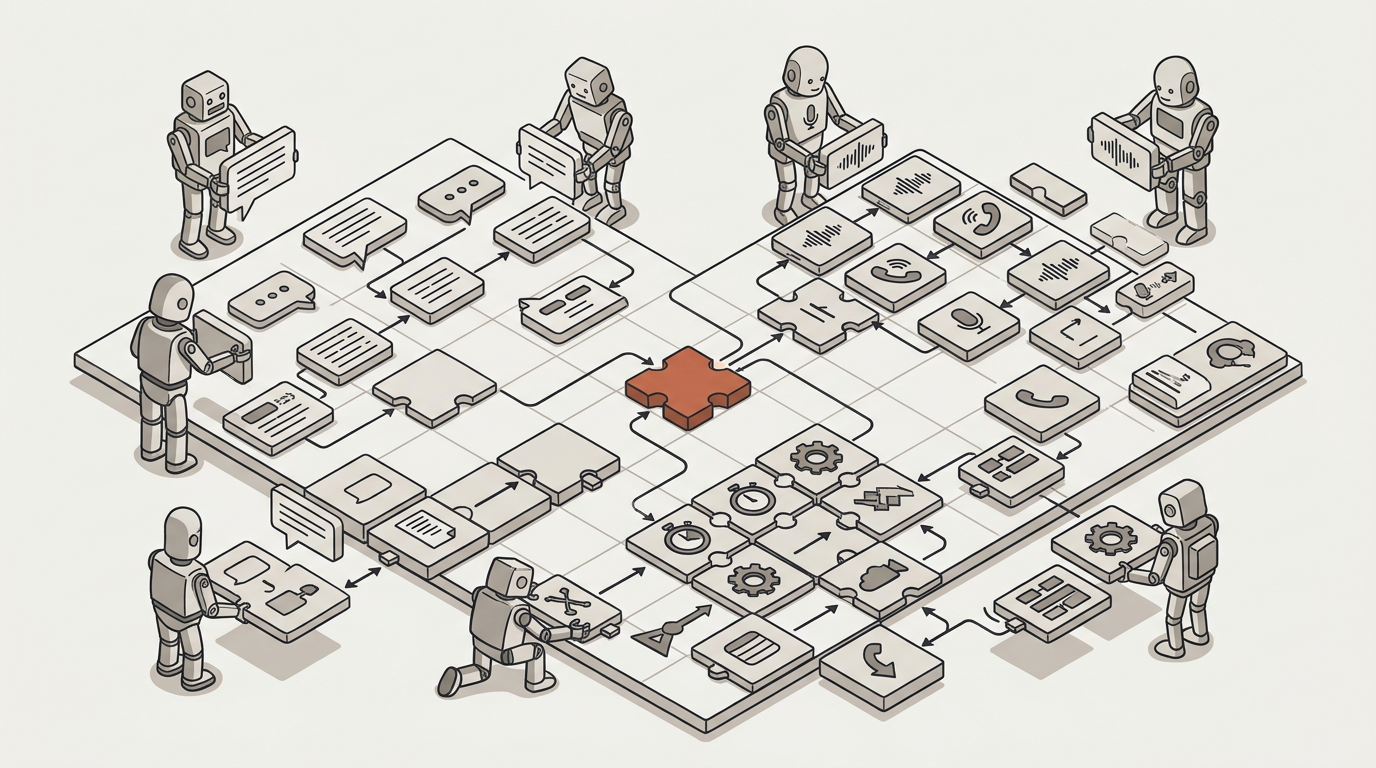
It starts from whatever starts the work
A workflow starts from a person's message, an inbound call, a form, an email, a webhook, a schedule or a document landing in a knowledge base. What happens next is drawn on a canvas: an agent with its instructions and knowledge, a tool that acts in a real system, a decision that sends the run one way or the other, a loop over a list and a review step where a person approves or edits.
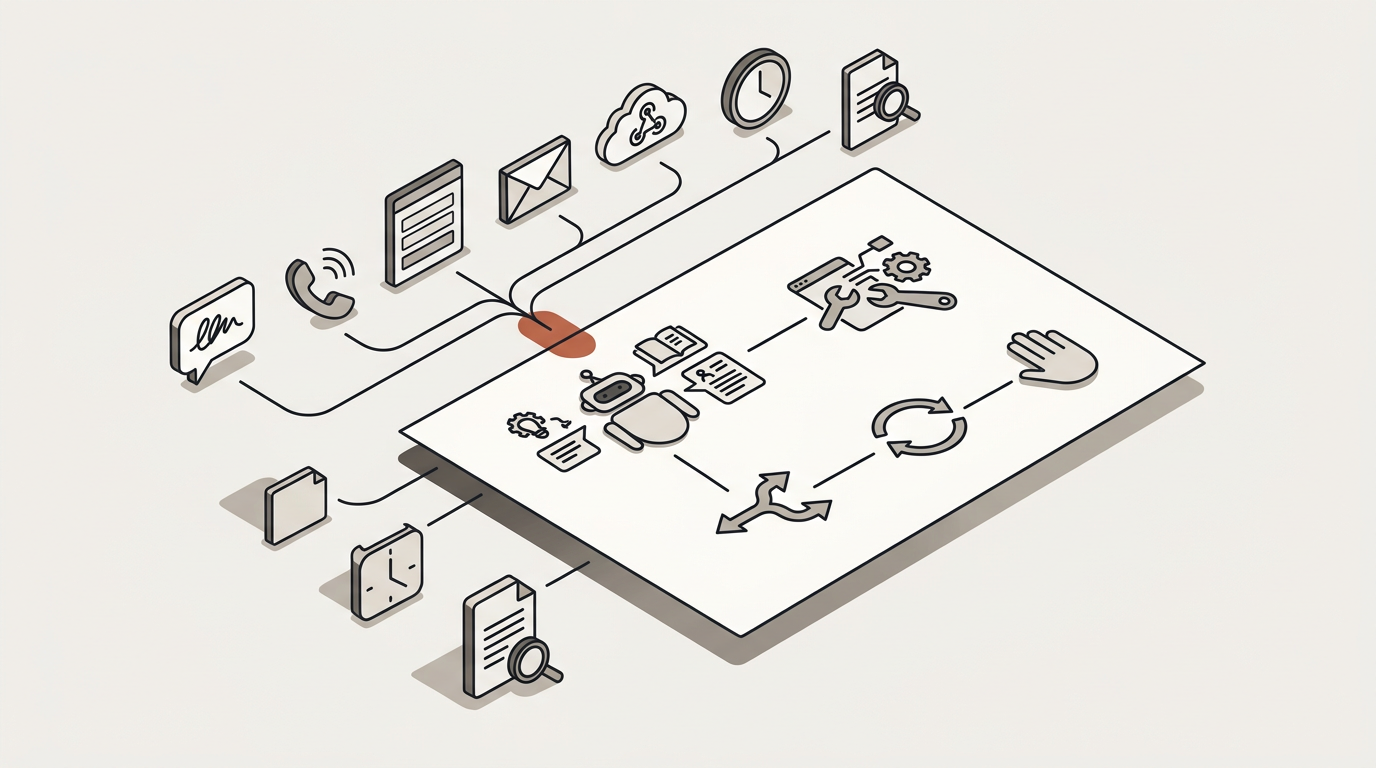
Built by the person who runs the process, not by an engineer
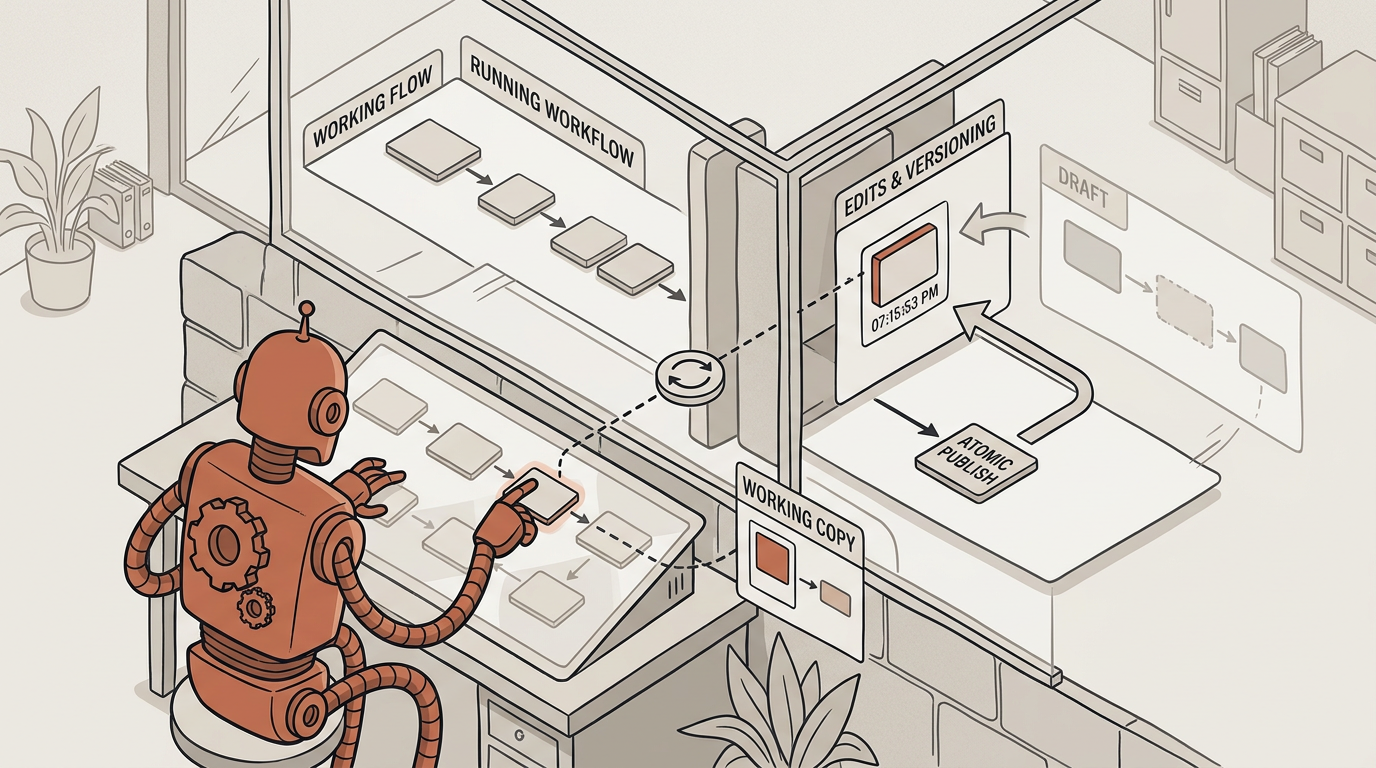
Every step's configuration is versioned, edits live in a working copy and not in the running workflow, and publishing is atomic. A live workflow never falls back to a draft because somebody was halfway through changing it.
What you can build
Chat agents, voice agents, automations and subflows on the same canvas
They share the nodes, the knowledge, the tools and the review mechanics. What differs is what starts them.
Chat agent
Starts from a person's message on your dashboard, client portal, website widget, mobile app or an email address. It answers from your own material and acts with tools.
Voice agent
Starts from an inbound call. The same agent on the phone, with the call transferred to a person's number when it should be, and the context preserved.
Automation
Starts from a form, an inbound email, a webhook, a schedule or a document arriving. Unattended, multi-step work, with a human checkpoint exactly where you put one.
Subflow
Starts from another workflow. Build a piece once and call it from everywhere, instead of rebuilding it in four places and fixing it in three.
What makes an unattended run safe to leave alone
What decides whether a business turns automation on is not what it can do but what happens when something goes wrong at three in the morning. There are four answers, and none is a setting you can forget to switch on.
- Every externally visible action claims a key before it acts, so a retry returns the original outcome instead of repeating it.
- An action that may or may not have completed is held for a person to reconcile, and never retried blindly.
- Unattended sends are capped per run and per organisation. Reaching the ceiling pauses the run for a decision rather than failing open.
- Every run keeps a step-by-step trace, and the owner is notified of every final outcome, including the ones that ended badly.
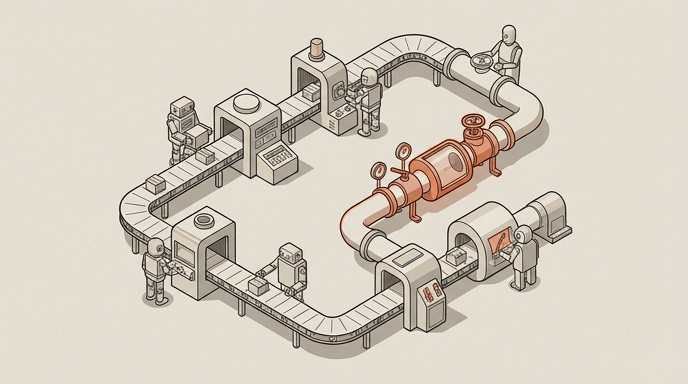
What you build with it
Start with the process that costs you the most hours
Document & data processing
The paperwork arrives as an attachment and somebody retypes it. This is the workflow that stops that.
Read moreBack-office automation
Renewals, closings and filings that run on a schedule instead of on somebody’s memory.
Read moreSee it built, on your own process
Bring the procedure that costs your team the most hours. A demo is the fastest way to tell whether it fits.