AI agent tools: the capabilities that turn an answer into an action
Answering is the easy half. A tool is what turns an answer into a booked meeting, a drafted document, a posted entry or a filed submission. It is built once, versioned, attached to any agent you choose, and logged on every call.
A capability, not a connection
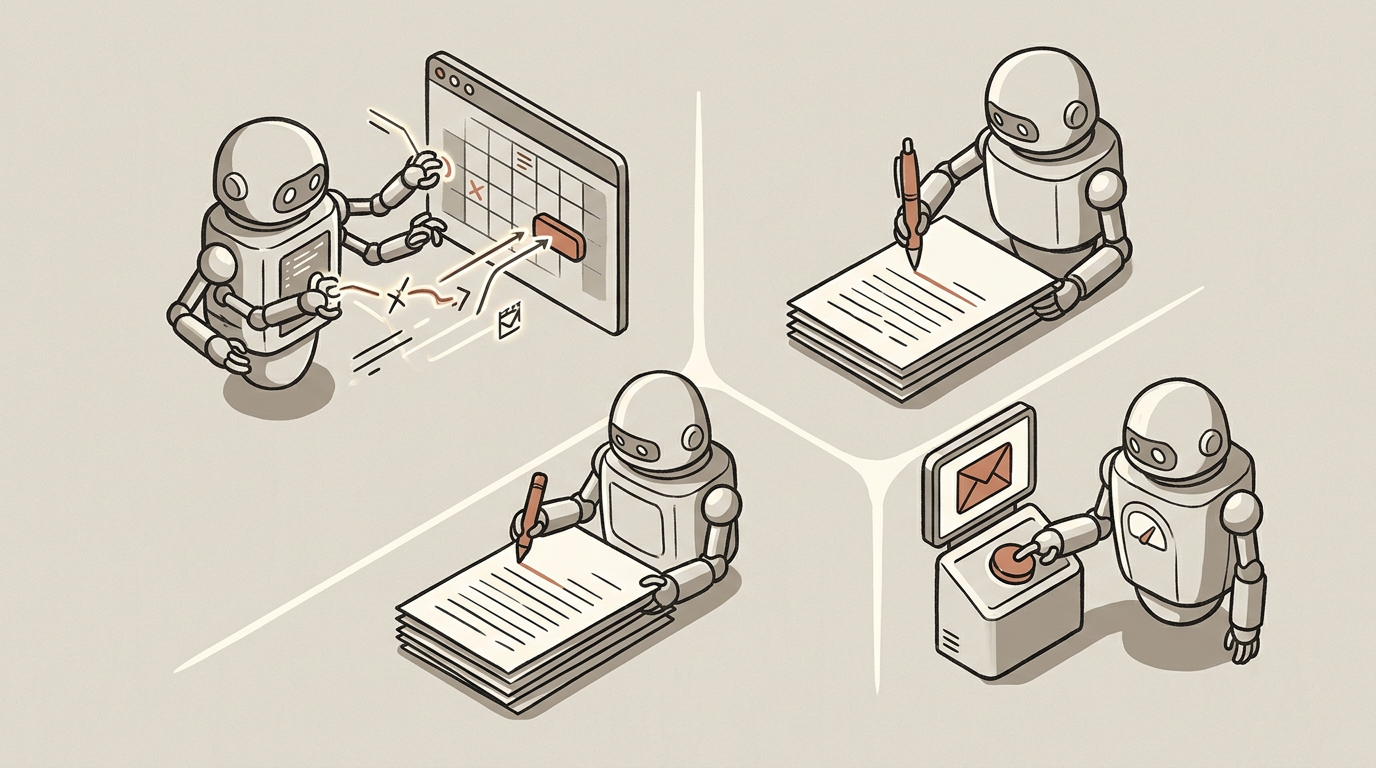
This is the act layer, not the catalogue of systems you can connect to and not the method-by-method access to one. A tool is a capability: send from your own verified address, check a calendar and book, draft from your template, emit a spreadsheet, or run a recipe against a website that has no interface for machines.
Built once, logged every time
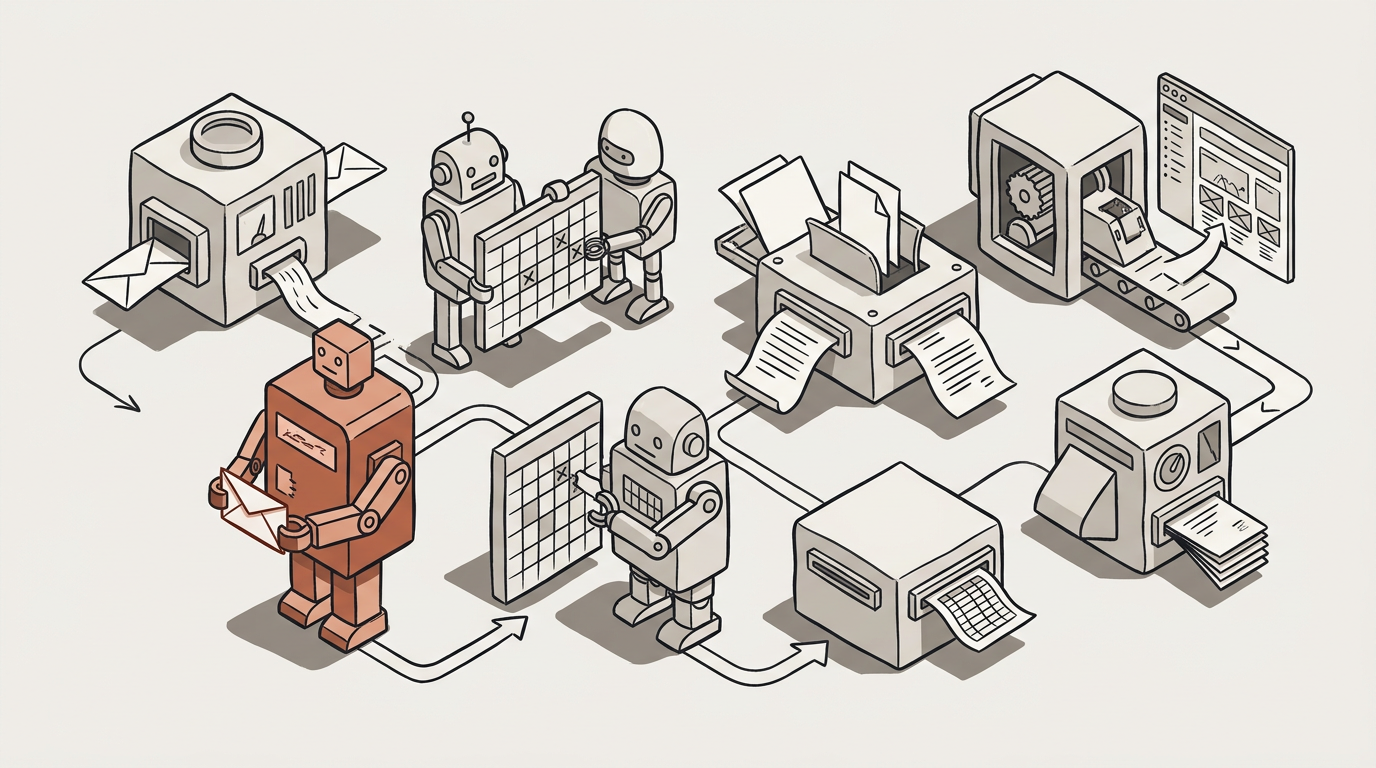
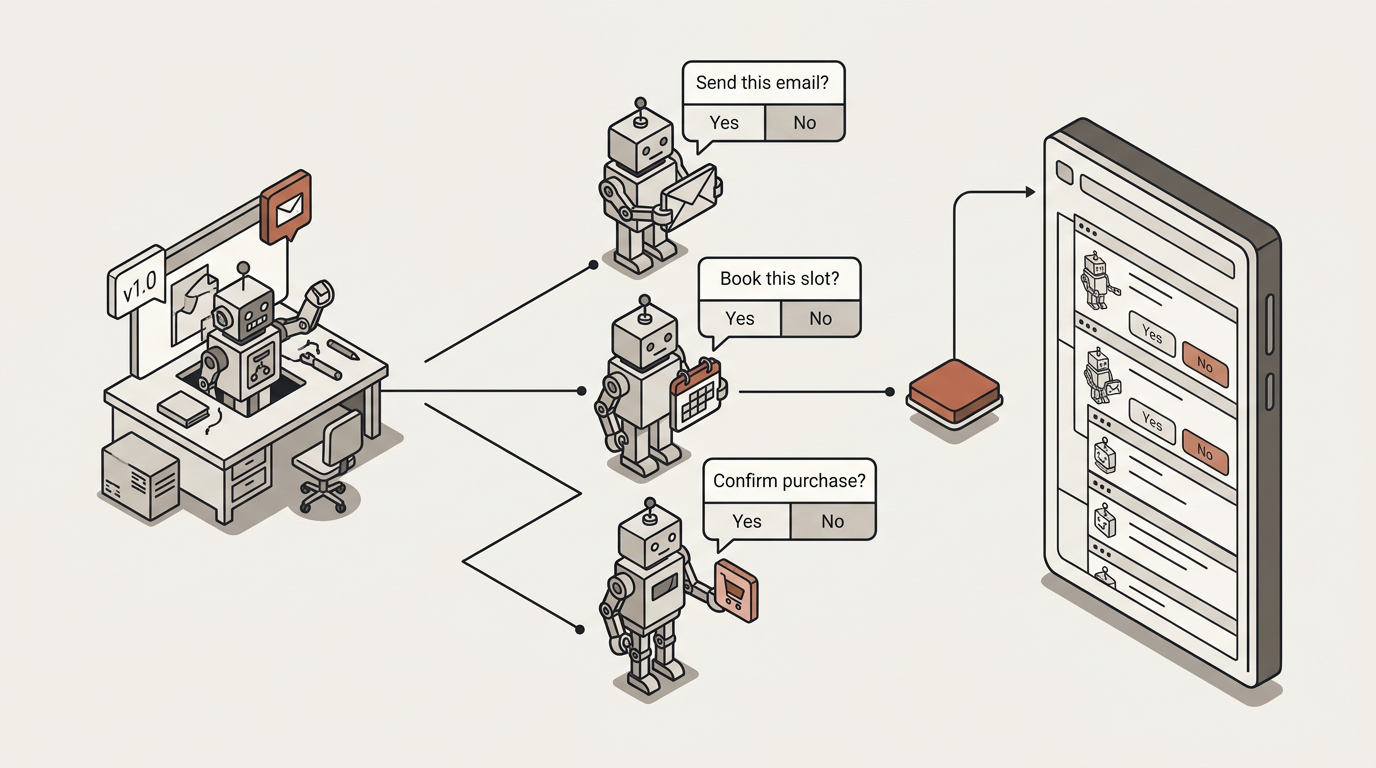
A tool is built once, versioned and published, then attached to whichever agents should have it. Every call is logged. Where a tool has a side effect inside a conversation, the person is asked first, such as "send this email?" or "book this slot?", so an agent never acts on someone's behalf without them seeing it.
What a tool can do
The work that used to need a person at a keyboard
Grouped by what it changes: a message, a calendar, a record, a document or a screen that has no other way in.
Send and notify
Email from your own verified sending identity, with unsubscribe and pacing respected, and outbound notifications to the channels your team already watches.
Check, book, reschedule
Real availability on a staff calendar, then the booking, the change or the cancellation, not a form that someone transcribes later.
Draft and export
Documents from your own templates, edited collaboratively and exported as PDF, Word or Markdown, and a loop's accumulated data emitted as a spreadsheet.
Reach a screen with no way in
An ordered recipe against a site that offers nothing to machines. It signs in with a stored credential, navigates, extracts, fills and submits, confined to the destinations you allow-list.
Read and write records
Your own contacts, accounts and sessions, the ledger and the deal, through one interface, whatever is on the other side of it.
Your own logic
A function you write, run in an isolated sandbox with no network and no access to the host, fresh on every call.
What stops a tool doing something you did not intend
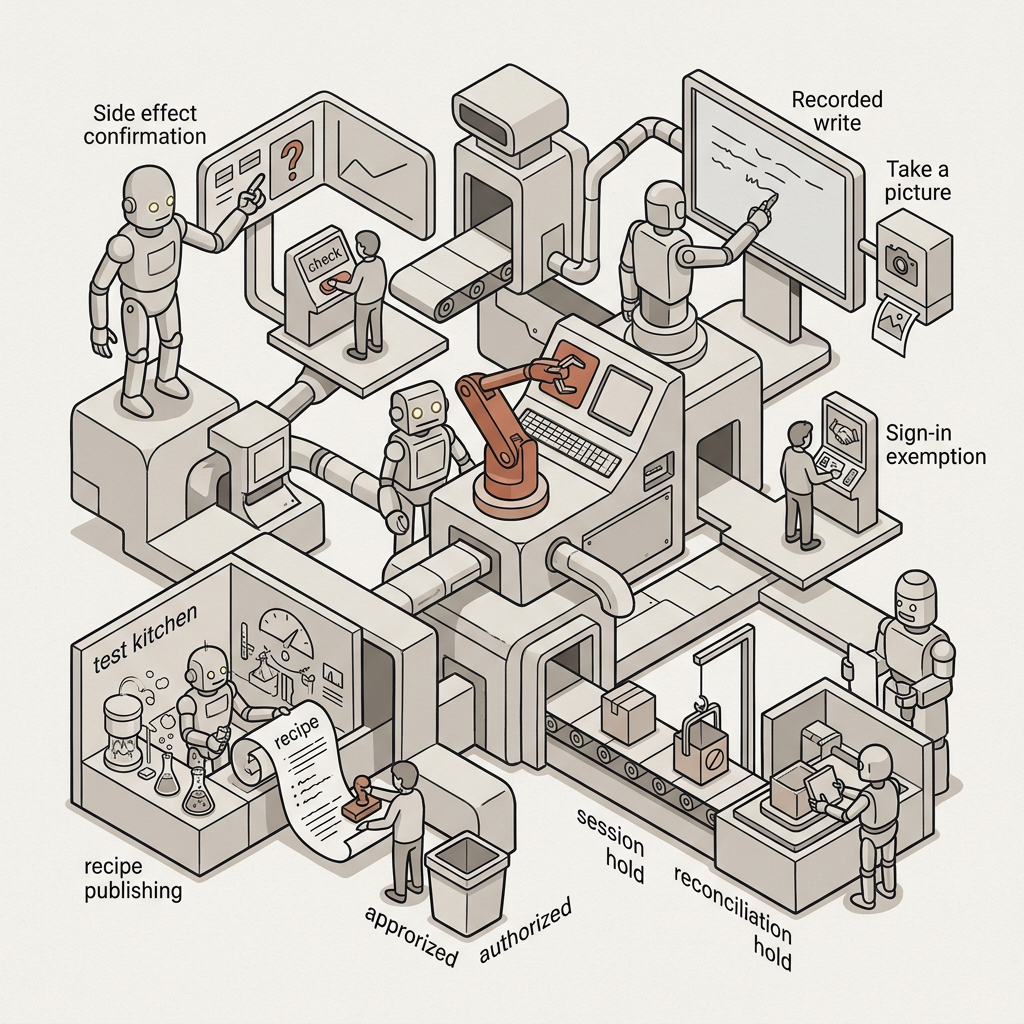
A tool that can act is a tool that can act wrongly. The answer is not to make it timid. It is to bound what it may reach, record what it did and ask before anything irreversible.
- A side effect inside a conversation is confirmed with the person first.
- Every write against an outside screen is photographed as evidence, and a sign-in never is, by design.
- A recipe that writes cannot be published without a test run and an explicit acknowledgement.
- A session that wrote and did not finish is held for reconciliation, never re-run.
What you use it for
Start with the task nobody wants to do twice
Document & data processing
The paperwork that arrives as an attachment and leaves as a retyped line.
Read moreBack-office automation
Renewals, closings and filings that run on a calendar, not on somebody's memory.
Read moreBring the task nobody wants to do twice
The clearest way to judge a tool is to watch it do your work, with the record of what it did.